
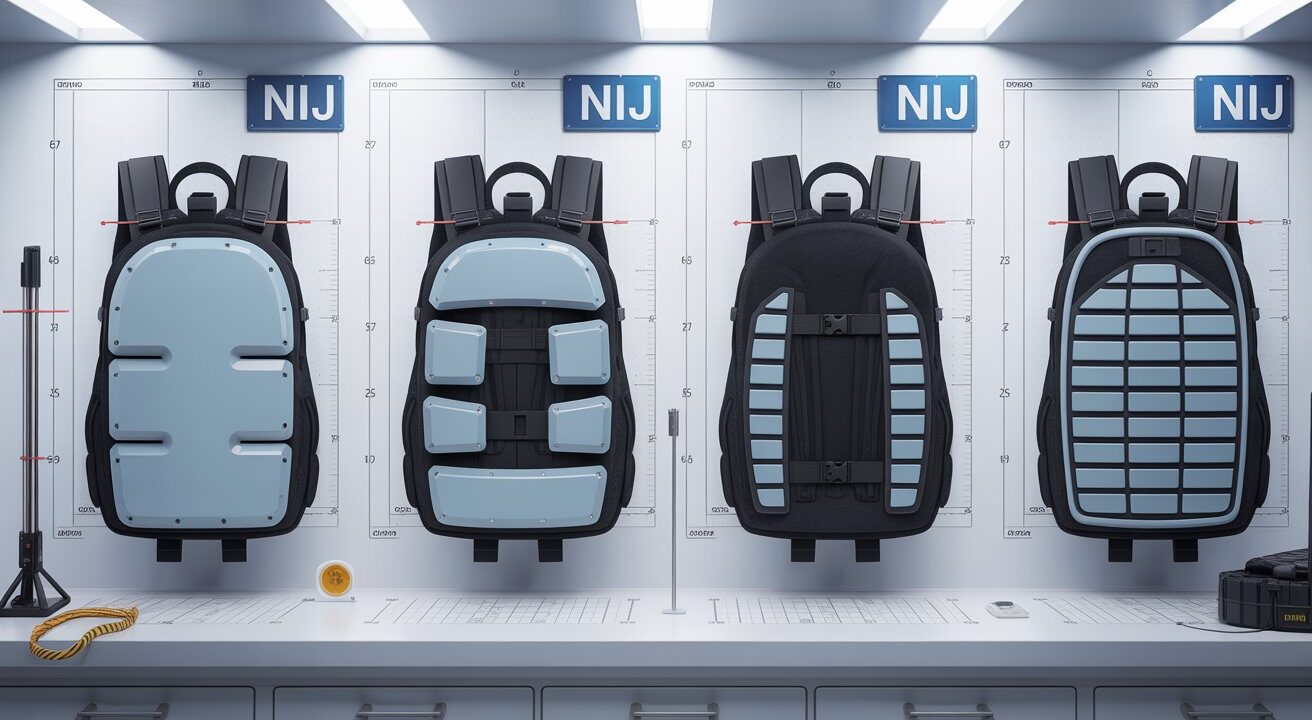
The backpack insert market is one of the most crowded and least regulated corners of the personal protection space. The demand is real, the emotional stakes are high, and that combination has produced a category full of products making protection claims that don’t hold up to basic scrutiny. Before any money changes hands, there are a few things worth knowing.
“Bulletproof” Is a Marketing Word, Not a Standard
No armor product is literally bulletproof. The word exists on product listings because it sells, not because it describes a testable, verified property. The actual standard that matters is NIJ certification, and the gap between a product that carries it and one that doesn’t is the most important distinction in this entire category.
NIJ Certified means the product was independently tested by a third-party laboratory approved by the National Institute of Justice and is listed on the NIJ Compliant Products List at nij.gov. That list is publicly searchable and free to check. If a product isn’t on it, the protection claims are unverified regardless of how the listing is worded.
Before evaluating price, size, brand, or any other factor, search the specific product on the NIJ list. If it’s not there, move on.
The Size Problem Most Buyers Don’t Catch Until It’s Too Late
Backpack inserts are sold in standard dimensions, commonly 8×10, 9×12, and 10×12 inches. The panel only protects what it sits behind, which means a panel that doesn’t fit the bag correctly, either sliding around inside it or bending at the edges because the compartment is too narrow, is not performing as tested.
Measure the back panel of the specific bag before purchasing an insert. The insert should sit flat, stable, and flush against the back surface. Many manufacturers list compatible bag dimensions, and those specifications are worth following rather than assuming a standard size will fit any bag.
For children’s bags particularly, the adult standard 10×12 panel often doesn’t fit without modification. Several manufacturers produce 8×10 panels specifically for smaller bags, and those are worth looking at rather than forcing an oversized panel into a bag it doesn’t fit.
Protection Level: Matching the Rating to the Realistic Threat
Backpack inserts are available in soft armor ratings (Level II, Level IIIA) and occasionally hard plate configurations (Level III). The right choice depends on an honest assessment of what protection is actually needed.
Level IIIA is the most practical choice for the majority of buyers. It covers a broad range of handgun calibers, remains relatively thin and flexible, and is significantly lighter than hard plate alternatives. Level II offers less coverage at reduced weight, which may be relevant for younger children carrying lighter bags.
Hard plate inserts rated to Level III exist and do stop rifle-caliber rounds on the panel coverage area. The weight of a Level III hard plate, often 5 pounds or more for a single panel, needs to be weighed against whether a child or commuter will consistently carry a bag that heavy every day. An insert that gets left at home because the bag is too heavy provides no protection.
The Price Trap
This category attracts low-cost products with no meaningful certification, priced to appeal to buyers who are spending emotionally rather than analytically. A $40 insert with no NIJ listing and vague claims about “ballistic-grade materials” is not providing the protection implied by its marketing.
A quality NIJ-certified Level IIIA soft armor insert runs between $80 and $200 depending on dimensions and material construction. UHMWPE-based panels sit at the higher end of that range and offer better protection-to-weight ratios than traditional Kevlar constructions. Anything substantially below $80 for a certified panel warrants very close scrutiny of the actual certification documentation.
What to Actually Check Before Buying
Work through these before purchasing any insert:
- NIJ Compliant Products List: Verify the exact product model at nij.gov, not just the brand
- Protection level: Confirm Level IIIA for most applications, Level II for younger children with weight concerns
- Panel dimensions: Measure the bag first and confirm the insert fits flat without bending
- Material type: UHMWPE for the lightest option at equivalent protection, traditional Kevlar for lower price point
- Manufacturing date: Note it on arrival. NIJ recommends evaluating soft armor for replacement around five years from manufacture
- Care instructions: Most soft armor should not be machine washed, folded repeatedly, or stored in high heat. How the product is maintained affects how long it performs
One More Thing Worth Saying Directly
A backpack insert covers the panel area of the back when the bag is being worn and facing the threat. It does not cover the front, the sides, the head, or any area outside the panel dimensions. Understanding that scope honestly is part of making a considered purchase rather than one driven purely by anxiety.
For parents, commuters, and professionals evaluating this product category, the right insert is the one that is NIJ-certified to the appropriate level, fits the bag correctly, and will actually be carried consistently. Those three criteria matter more than any other specification on a product listing.
If you want help working through which insert specification makes sense for your specific situation, the team at Arctos is glad to cut through the noise.
Is this for a child’s school bag or adult daily carry? The sizing and weight conversation differs depending on the answer.