






HRT Back Panels: The Overlooked Component That Completes Your Carrier
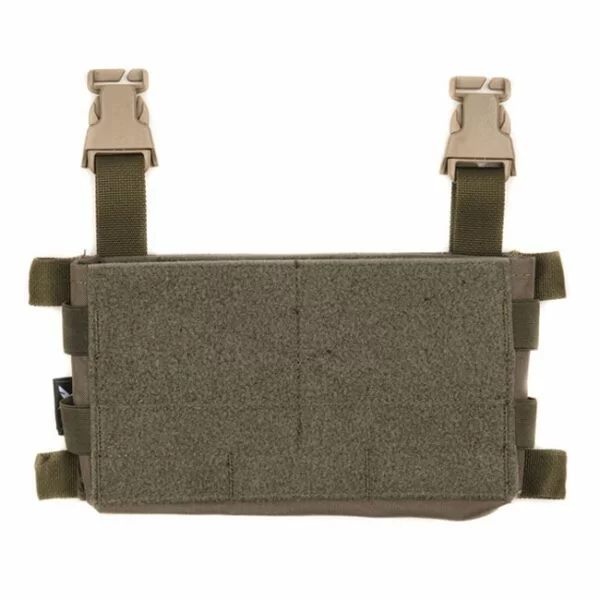
By Duncan Horner, CEO — Arctos Industries For Law Enforcement and Military professionals: your agency’s training officers, unit SOPs, and chain of command should guide your specific gear configuration and operational employment. This article focuses on equipment specifications and configuration considerations to inform gear selection decisions. The back panel of a plate carrier is the most consistently under-configured real estate in a tactical loadout. The front panel gets the attention because it’s visible and because it carries the magazine configuration that most operators think about first. The back panel is out of sight during normal wear, which means it tends to get configured last, configured minimally, or not configured at all. That neglect costs operators and teams in ways that become obvious in the field and aren’t obvious on a gear shelf. The back panel is where medical equipment lives for team casualty assist. It’s where hydration and sustainment go for extended operations. It’s where team identification and comms routing belong in coordinated team environments. A carrier with a complete front panel and an empty back panel is a carrier that’s missing half its configuration. What the Back Panel Is Actually For The back panel serves three distinct functions depending on the operational context, and understanding which function is primary for a given role determines how the back panel should be configured. The first function is casualty assist medical equipment staging. In a team environment, an injured operator’s medical equipment is most accessible to a teammate from the back of the carrier, not the front. An IFAK mounted on the back panel with a consistent pull handle accessible to a gloved hand from the operator’s six o’clock is medical equipment that a teammate can access without requiring the casualty to self-administer and without the teammate needing to work around the casualty’s front panel configuration. That accessibility can make a measurable difference in time-to-treatment in a casualty scenario, and it depends entirely on the back panel being configured for it rather than left empty. The second function is sustainment carry for extended operations. A patrol or training evolution that runs longer than a few hours needs hydration, nutrition, and potentially additional equipment that the front panel doesn’t have space for and the belt isn’t appropriate for. The back panel, configured with a hydration-compatible sleeve or MOLLE-attached sustainment pouches, turns the carrier into a platform that can support extended operations without requiring a separate pack. For operators who are already carrying a heavy front panel, the back panel distribution of sustainment weight can actually improve overall carry comfort by balancing the load front-to-back rather than concentrating it on the front. The third function is team coordination equipment. Radio antennas, chem light staging, team identification panels, and comms cable routing all belong on the back panel in coordinated team environments. An operator who runs their comms antenna on their back panel rather than their shoulder or their carrier side keeps it out of the way of their shooting position and arm movement while keeping it elevated for signal quality. Team identification panels on the back panel are readable by following operators during movement and by aerial observation without requiring the operator to move into a position that exposes them from the front. Back Panel Options: From Flat to Fully Configured HRT back panels range from flat panels that keep the carrier’s back surface clean and comfortable for minimally equipped configurations, to full MOLLE coverage panels that support the complete sustainment and medical equipment staging that extended operations require. A flat back panel is the right choice for roles where the back panel’s primary function is comfort rather than equipment staging. A patrol officer who runs their IFAK on the belt and their hydration on a separate system may not need MOLLE attachment capability on the back panel at all. A flat panel keeps the carrier back surface smooth, reduces heat retention in the back zone, and eliminates the MOLLE webbing that can catch on vehicle interiors and tight spaces during operational movement. For short-duration, high-mobility roles where every potential snag point matters, the flat panel is a considered choice rather than a default. A partial MOLLE back panel provides attachment capability in the upper or lower back zone without covering the full back surface. The upper back panel position is better for IFAK staging and team identification where the equipment needs to be visible and accessible from the operator’s six. The lower back panel position is better for sustainment carry where the weight should sit lower on the carrier for optimal carry comfort. For operators who need back panel capability in one zone but not the other, a partial configuration avoids the weight and bulk of full coverage MOLLE in areas that aren’t being used. A full MOLLE back panel covers the complete back surface of the carrier with attachment-compatible webbing. This is the configuration for extended operations where the back panel needs to carry a full IFAK, a hydration system, an admin pouch, and potentially additional mission-specific equipment simultaneously. The full MOLLE back panel is heavier than a flat or partial panel, and the weight of everything attached to it adds to the total carrier weight in ways that need to be accounted for when the front panel is also fully loaded. The HRT back panel range covers flat, partial, and full MOLLE configurations with the attachment compatibility and sizing information that makes selecting the right option for a specific carrier and role straightforward. IFAK Placement: Why the Back Panel Position Matters for Team Operations The IFAK placement decision is the back panel configuration decision with the most direct operational consequence, and it’s worth covering in more detail than the other configuration decisions because the reasoning behind it isn’t always intuitive. An IFAK on the belt is accessible to the operator wearing it for self-treatment. An IFAK on the back panel is accessible to a teammate for partner treatment. Both have a place in a complete medical equipment plan, and they