
Security work covers an enormous range of environments, and that range is exactly where most armor purchasing decisions go wrong. A guard at a corporate lobby, a hospital security officer, an armed bank guard, and event security at a large venue are all doing security work, but the threat profile for each of those roles is genuinely different. Starting with the environment rather than a generic “security guard armor” search is what leads to a purchase that actually makes sense.
What the Threat Environment Actually Looks Like
The majority of security guard roles in the United States involve a realistic handgun threat at most, not a rifle threat. That distinction matters because it directly determines the appropriate armor specification.
NIJ Level IIIA soft armor, tested against a broad range of handgun calibers including higher-velocity 9mm and .44 Magnum, is the practical baseline for most security professionals. It provides meaningful protection against the threats most likely to be encountered, in a format that’s wearable across a full shift without the weight penalty of a hard plate system.
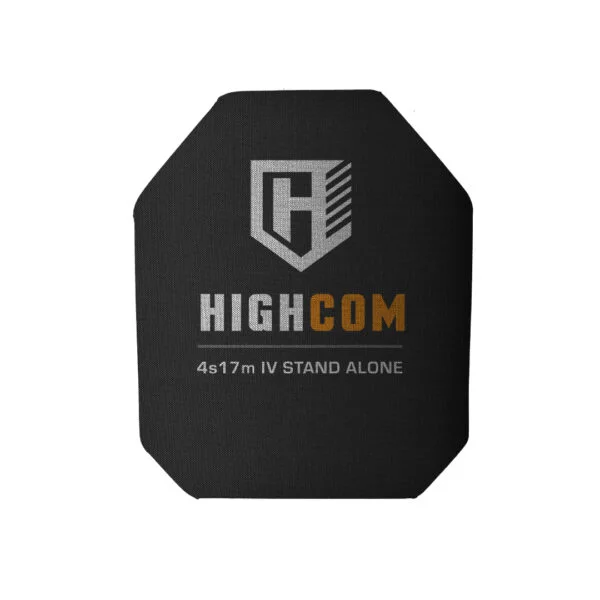
Hard plates, rated to Level III or Level IV for rifle threats, are relevant for security roles in genuinely elevated-risk environments, executive protection in hostile regions, or armed transport in high-threat areas. For standard commercial or retail security, pursuing rifle-plate level protection adds significant weight and cost without a proportionate threat justification.
Overt vs. Covert: The Professional Appearance Question
This is a practical decision that often gets skipped in general armor content but matters considerably for security professionals.
Overt carriers worn over the uniform are visible, communicate a security presence, and allow better ventilation during long shifts. They’re appropriate for roles where a visible deterrent is part of the job and where full tactical appearance is acceptable or expected.
Covert soft armor, designed to be worn under a shirt or uniform, is the right choice for plainclothes security, corporate environments where a low-profile appearance matters, and roles where visible armor would undermine the professional setting. Covert vests run thinner and warmer than overt carriers, so comfort across an 8 to 12 hour shift is worth evaluating seriously before purchasing.
Many security professionals working in customer-facing environments find that a quality covert Level IIIA vest worn under uniform clothing provides the protection they need without affecting their professional presentation.
Individual Purchase vs. Employer-Issued Armor
Security guards frequently find themselves in an ambiguous position: the employer doesn’t provide armor, or provides equipment that is inadequate or poorly fitted. In those cases, personal purchase becomes a practical consideration.
If you’re purchasing personally, the same evaluation principles apply as any armor purchase. Verify NIJ certification on the NIJ Compliant Products List before buying. Confirm the panel dimensions and carrier fit ensure proper coverage over the cardiac zone. Request third-party certification documentation, not just a marketing claim on a product page.
For security company owners or managers equipping a team, fit variation across staff is the most common practical challenge. Armor that fits one officer well may fit another poorly, and a poorly fitted vest doesn’t protect what it’s positioned over. Building a sizing and fit evaluation step into any team procurement process, rather than ordering a uniform size for everyone, is worth the additional effort. The full range of body armor options across panel types and carrier systems is a useful starting point for understanding what a team procurement evaluation involves.
Shift Length and Wearability
This is the factor that most online armor content underweights, and it’s where a lot of security guard purchases disappoint in practice.
An armor vest that feels fine for 30 minutes in a fitting room feels different at hour seven of a standing shift in a retail environment. Weight, panel stiffness, heat retention, and carrier fit all compound over time. A vest that doesn’t get worn because it’s uncomfortable during long shifts provides no protection.
When evaluating options, prioritize panels that are certified to the appropriate NIJ level and are constructed from materials that balance protection with wearability for the actual shift duration involved. Lighter UHMWPE-based soft armor panels run cooler and more flexible than traditional Kevlar constructions at comparable protection levels, which is worth factoring in for roles involving extended continuous wear.
Legal Considerations for Security Guards
Most U.S. states permit security guards to wear body armor, and many security roles involve armed status that makes armor a professionally reasonable and expected choice. However, state-level regulations on body armor ownership and the specific requirements for licensed security professionals vary.
New York’s civilian body armor restrictions include an exemption for licensed security professionals, but the specifics of that exemption matter and are worth confirming against current state law for anyone purchasing in that state. If you’re operating across multiple states, understanding the relevant regulations for each jurisdiction is part of responsible gear sourcing.
Matching Armor to Role: A Practical Framework
| Security Role | Recommended Level | Format |
| Corporate / retail security | Level IIIA | Covert soft armor |
| Event / crowd security | Level IIIA | Overt or covert depending on uniform |
| Armed bank or transport guard | Level IIIA minimum, evaluate IIIA + plates for elevated risk | Overt carrier with soft armor |
| Hospital security | Level IIIA, evaluate stab rating for ward environments | Covert or overt depending on role |
| Executive protection | Threat-dependent, evaluate Level IIIA to Level III | Role-specific |
Stab resistance is worth a separate mention for hospital and detention-adjacent security roles, where bladed and spike threats may be more realistic than ballistic threats. NIJ Standard 0115.00 covers stab and spike protection independently from ballistic ratings, and multi-threat vests that address both exist for environments where both are relevant.
If you’re sourcing armor for a security role and want a straightforward conversation about what specification makes sense for your specific environment, the team at Arctos is glad to help.
Is this for an individual purchase or equipping a team? That changes the evaluation process meaningfully.