
By Duncan Horner, CEO – Arctos Industries
You just got issued a plate carrier. Or maybe you’re setting up your first personal rig. Either way, you’re staring at a pile of straps, pouches, and plates wondering where to start.
For starters if your are in Law Enforcement your Agency is likely going to have a required list of equipment and experienced training officers to give you direction on what and where to put your gear. So this article probably isn’t for you.
The internet’s full of “tactical experts” showing off their Instagram-ready setups with more gear than a deployment to Fallujah. But here’s the thing: a good plate carrier setup isn’t about looking cool. It’s about keeping you protected, mobile, and able to do your job.
Let’s break down what actually goes into building a plate carrier setup that works.
The Foundation: Choosing Your Plate Carrier
Before you start strapping pouches onto everything, you need the carrier itself.
What to look for:
Your plate carrier has one primary job: hold your armor plates securely against your body in the right position. Everything else is secondary.
Key features that matter:
- Plate pocket size compatibility – Make sure it fits the plate size you’re running (10×12 is most common, but verify yours)
- Adjustability – Shoulder straps and cummerbund should let you dial in fit without excessive bulk
- Weight distribution – Good carriers spread the load across your shoulders and rib cage, not just your traps
- Breathability – You’ll be wearing this for hours. Ventilation matters more than you think.
What doesn’t matter as much as you think:
- Brand hype
- 1000D materials
- Laser-cut vs. sewn (both work fine)
I’ll be the first to admit: there are a hundred good carriers on the market. The “best” one is the one that fits your body, holds your plates securely, doesn’t fall apart after six months and fits your budget.
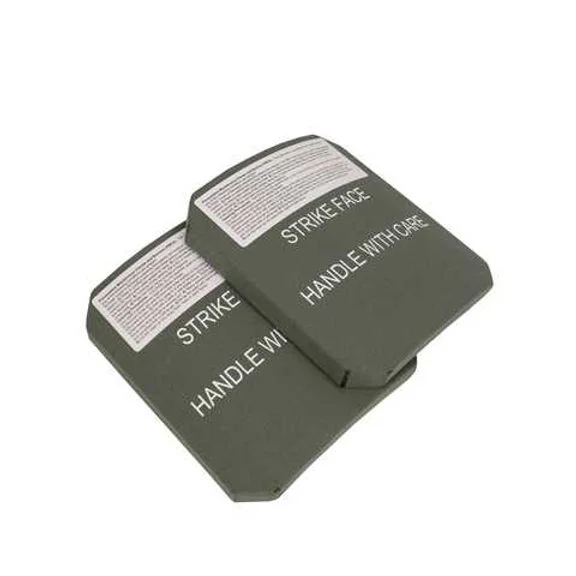
The Core: Armor Plates
This is where your protection actually comes from. The carrier is just the delivery system.
Front and back plates:
At minimum, you need rifle-rated hard plates front and back. For most law enforcement and civilian applications, that means NIJ Level III or III+ rarely Level IV (The updated threat levels are now RF1, RF2 & RF3, respectively).
Not sure which level you need? Here’s the simple version:
- Level III(RF1) – Stops common rifle threats up to 7.62x51mm NATO (think: hunting rifles, AK-47 mild core, AR-10)
- Level III+ (RF2) – Stops level III/RF1 threats PLUS 5.56×45 M855/SS109 ‘Green Tip’ Rounds
- Level IV (RF3) – Stops Level III+/RF2 threats PLUS armor-piercing 7.62×63 (30-06 AP)
Most patrol officers, SWAT teams, and responsible civilians running a carrier are well-served by Level III or III+. If your threat environment includes armor-piercing ammunition (federal agents, high-risk warrants, military), step up to Level IV.
Material matters:
Price is the biggest factor in what materials go into plates. Steel, ceramic, HDPE, composite all have trade-offs.
Steel is heaviest but the least expensive.
Ceramic or composite (a mix of a ceramic strike face with HDPE backing) is the most common in level III+/RF2 plates.
HDPE is lighter but more expensive and can typically only stop non-armor piercing threats.
Side plates:
There are 2 options here:
Level IIIA soft panels for frag and pistol protection and hard 6”x6” plates to increase rifle protection from oblique angles.
Both options increase weight and restrict your movement so you need to consider the cost benefit analysis on if the marginal increase in protection is worth it.
When to consider running side plates:
- High-threat environments (active warrants, raids, military ops, firearms calls and barricaded suspects)
- If your mission profile involves standing still or limited movement (overwatch, vehicle-mounted operations)
When you may not need them:
- Long patrol shifts on foot
- Roles requiring a lot of movement, climbing, or vehicle ingress/egress
- Budget or weight constraints that force you to choose between better front/back plates over adding sides
Be honest about your actual mission needs while evaluating your options.
Load-Bearing: Pouches and Accessories
Your plate carrier should carry the mission-essential gear you might need in the 5–15 minutes between contact and either resolving the situation or getting to your vehicle/backpack/long-term kit.
These are some of the most common items you’ll find on the professionals:
Magazines – This one’s obvious. Most setups run 3–4 rifle mags and 2–3 pistol mags on the front of the carrier. Put your rifle mags where you can reach them without looking or thinking.
IFAK (Individual First Aid Kit) – God forbid you or your partner take a hit, you need immediate access to a tourniquet, chest seal, and pressure dressing. Many people run this on the back of their belt or plate carrier.
Communication – Radio pouch and PTT (push-to-talk) placement depends on your radio type and whether you’re running a headset.
Utilities – Small admin pouch for chem lights, zip ties, sharpie, whatever small essentials your job requires. Don’t go overboard.
Knife – It’s also common to see people carrying a blade that can be easily accessed from their plate carrier or on their belt. In both cases it will be forward of the hips.
Stop here and ask yourself: Do I actually need anything else on this carrier?
Other gear to consider:
- Dump pouch (useful, but not essential for most LE roles)
- Flashlight (if it’s not on your belt or rifle, where is it?)
- Multi-tool pouch (nice to have, but mission-critical?)
- Hydration (most missions don’t last long enough to need it on your carrier)
You can always add later. Start light. Train with it. Add only what you find yourself actually reaching for.
Fit and Adjustment: The Part Most People Get Wrong
You can have the best plates and the best carrier, but if it doesn’t fit right, you’re setting yourself up for either inadequate protection, a back injury or gassing out before the fight is over.
How your carrier should fit:
Front plate position: The top edge of your front plate should sit in the “jugular notch”—that little dip at the base of your throat between your collarbones. This protects your heart, lungs, and major vessels. If the plate is too low, your cardiac box is exposed. Too high, and it willb e hitting your chin or choking you.
Back plate position: Should sit roughly level with the front plate. Some people run it slightly higher to protect the shoulder blades, but you don’t want it sitting on top of your shoulders creating a pressure point or slumping too low to expose the top of your lungs.
Shoulder straps: Snug but not cutting into your traps. The weight should distribute between your shoulders and the cummerbund around your torso. It should not hang loose on your shoulders.
Cummerbund/side closure: Tight enough that the carrier doesn’t shift or bounce when you move, but not so tight you can’t breathe or bend. You should be able to take a full deep breaths. Imagine you are running or fighting and you can’t take those deep full breaths. Test this out.
The test: Put your carrier on, do 10 burpees or a couple short sprints then check if anything shifted. If your plates moved or the carrier rode up, tighten it. If you can’t breathe, loosen it.
Armor only works if you’re actually wearing it when you need it. You need to get accustomed to wearing it for long periods of time. No armor is 100% comfortable but you do need to breathe and prevent yourself getting injured due to pressure points.
Mission-Specific Considerations
Not all plate carrier setups are created equal, because not all missions are the same.
Patrol officers:
You’re wearing this for an 8–12 hour shift, most of it in a vehicle. Weight and comfort matter more than maximum load-out.
- Typically you are wearing a soft vest, possibly with plates over top
- Minimal pouches—just rifle mags, pistol mags, IFAK
- Skip the side plates unless policy requires them
- Consider a low-profile or slick carrier under a uniform shirt if your department allows it
SWAT/Tactical teams:
Shorter duration, higher intensity. You can accept more weight for more capability.
- Level IV plates if the threat profile warrants it
- Side plates make more sense here
- More mag capacity on the carrier
- Integrate communication and breaching tools as needed
Military/Deployed environments:
You’re potentially in kit for extended periods with less logistical support.
- Hydration becomes essential
- More ammunition capacity
- IFAK placement critical (train your team on where yours is)
- Consider blowout kit accessibility for self-aid
Civilian/Prepared citizens:
Honest talk: if you’re running a plate carrier as a civilian, you’re either training seriously or preparing for a very specific low-probability scenario.
- Focus on protection first, tacticool factor last
- Train with it regularly or it’s just expensive closet decoration
- Keep it simple. You’re not clearing Fallujah, you’re potentially defending your home or getting to safety
- Make sure you can put it on quickly in the dark under stress
Common Mistakes to Avoid
Let me save you some time and pain:
Mistake 1: Overloading your carrier
Just because you have MOLLE space doesn’t mean you need to fill it. Extra weight slows you down, fatigues you faster, and creates snag hazards. Ask yourself: “Will I need this in the next 15 minutes of high-stress work?” If the answer is no, it doesn’t go on the carrier.
Mistake 2: Never training with your setup
Your carrier should be set up the way you’ll actually use it. That means training with it. Shooting drills, moving, getting up and down, getting in and out of vehicles, accessing all your gear. If you can’t reload smoothly or draw your sidearm with your carrier on, your setup needs work.
Mistake 3: Buying plates that don’t fit your carrier (or vice versa)
Seems obvious, but I’ve seen it plenty: someone buys a carrier rated for 10×12 plates and then orders 11×14 plates because “more coverage is better.” Now the plates don’t fit the pockets correctly and shift around. Measure. Verify. Order accordingly. Some companies make plate bags with very tight tolerances, verify they fit your specific carrier before buying. Most companies have a ‘armor sales are final’ policy and won’t accept returns or exchanges which means you will have to buy a new carrier.
Mistake 4: Ignoring proper care and storage
Plates and carriers have a shelf life. Carriers develop wear points and need inspection. Store your gear properly, off the ground, out of sunlight, away from petroleum products. If you want to go deeper on storage solutions for your department’s gear when it’s not in use, Arctos can help with that too.
Mistake 5: Assuming “tactical” means “better”
I’ll be the first to admit, the tactical gear industry loves to sell you stuff you don’t need. Gucci gear doesn’t make you more effective if you haven’t trained with the basics. A simple, well-fit carrier with good plates and essential pouches will serve you better than a $2,000 setup covered in patches and accessories you’ve never used under stress. Buy the best you can afford and then spend as much time as possible training.
Building Your Setup: A Practical Starting Point
If you’re starting from scratch, here’s what I’d recommend:
Step 1: Get the plates right
This is your actual protection. Don’t cheap out here. Look for NIJ-certified plates from reputable manufacturers with solid warranties. Need help sorting through the options? Start here.
Step 2: Choose a carrier that fits your body and mission
It doesn’t need to be the most expensive or the most popular. It needs to fit you, hold your plates securely, and be durable enough for your use case.
Step 3: Add only essential pouches
Rifle mags, pistol mags, IFAK, radio (if applicable). That’s your starting point. Wear it. Train with it. Then add only what you find yourself actually needing.
Step 4: Fit it properly
Take the time to adjust everything correctly. This is not a “one size fits all” situation. Proper fit affects both protection and performance.
Step 5: Train with it
Seriously. Put it on and do work. Dry fire drills, movement drills, getting in and out of vehicles. Your plate carrier setup should become second nature, not something you fumble with when stress is high.
The Bottom Line
A good plate carrier setup is personal, mission-specific, and constantly evolving based on what you actually use.
There’s no perfect setup that works for everyone. The patrol officer working solo in a rural county has different needs than the SWAT operator hitting doors or the civilian preparing for a home defense scenario.
The best plate carrier setup is the one you’ll actually wear, that protects your vitals, and that lets you do your job effectively without unnecessary weight or complexity.
Still Not Sure What’s Right for Your Team or Mission?
If you’re putting together plate carrier setups for your department or just trying to figure out the right combination of plates and gear for your specific situation, talk to a product specialist at Arctos. We’ll walk through your actual mission profile, threat environment, and budget to help you choose gear the right gear for your needs.
What’s the biggest challenge you’re running into with your current plate carrier setup?