
Nobody joins law enforcement planning to lose their career over a storage room.
But it happens. More often than the profession likes to talk about, evidence room failures have ended the careers of officers, evidence custodians, and in some cases department leadership who had no direct involvement in what went wrong. The problem wasn’t always theft. It wasn’t always negligence in the traditional sense. Sometimes it was a system so inadequate that failure was almost inevitable, and someone had to be accountable when it came apart.
What follows are realistic scenarios drawn from the kinds of failures that have played out in departments across the country. Names and specifics are generalized, but the patterns are real.
The Case That Collapsed Mid-Trial
A detective spent eighteen months building a weapons trafficking case. Multiple suspects, substantial evidence, a prosecution the DA’s office was confident about. Then, during trial, defense counsel requested the chain-of-custody documentation for a firearm central to the case.
The evidence custodian couldn’t produce a complete log. The firearm had passed through at least three sets of hands between seizure and trial, and the manual sign-out sheet had gaps. One entry was illegible. One transfer had no corresponding return entry.
The judge didn’t dismiss the case outright, but the damage was done. The defense used the documentation gaps to argue the evidence had been mishandled, potentially contaminated, possibly tampered with. The jury acquitted on the primary charges.
The detective’s eighteen months of work evaporated. The evidence custodian faced an internal investigation. The department faced questions from the DA’s office about the reliability of their evidence handling across other active cases.
All of it traceable to a manual log system that was never adequate for the volume it was managing.
The Audit That Triggered a Federal Review
A mid-sized department underwent a routine state accreditation audit. The auditors requested a physical inventory of evidence firearms against the logged inventory. Forty-three items were supposed to be in storage. Thirty-nine were accounted for. Four firearms were missing.
Not necessarily stolen. Possibly transferred to another facility without a corresponding log entry. Possibly checked out for a court appearance and never formally returned. Nobody could say with confidence.
The accreditation body flagged the discrepancy. The state referred the matter for further review. Within weeks, the department was navigating a federal inquiry into evidence handling practices, with investigators pulling records going back five years.
The chief, who had been with the department for over two decades, retired under pressure before the review concluded. Two supervisors were reassigned. The department’s accreditation was suspended pending remediation.
Four firearms. Probably not stolen. Certainly not tracked.
The Officer Who Didn’t Know the System Was Broken
This scenario is the one that I think deserves the most attention, because it’s the most common and the least discussed.
A patrol officer seizes a firearm during an arrest. She follows the intake procedure exactly as she was trained. She fills out the paperwork, tags the item, places it in the evidence room. She does everything right.
Six months later, that firearm is unaccounted for. The intake log shows it came in. There’s no record of it going anywhere. It’s simply gone.
The investigation focuses on everyone who had access to the evidence room during that six-month window. The officer who originally logged the firearm is among them. She can prove she brought it in. She cannot prove what happened after that, because the system she handed it off to had no meaningful tracking beyond the intake entry.
She wasn’t disciplined. But she spent four months under investigation for something she didn’t do, in a department where colleagues knew she was under investigation, because the storage system she trusted to take over from her intake log simply didn’t work.
What These Scenarios Have in Common
In every case above, the failure wasn’t a single bad decision. It was a system operating below the accountability standard that modern evidence management requires, combined with volume or time pressure that exposed the gaps.
Manual logs fail because humans are inconsistent, especially under workload. Shared access systems fail because they can’t tell you which individual accessed a unit. Paper-based chain-of-custody fails in court because it can be challenged on completeness and authenticity in ways that digital audit trails cannot.
The departments in these scenarios weren’t indifferent to evidence management. Most of them had procedures. The procedures just weren’t backed by systems capable of enforcing them.
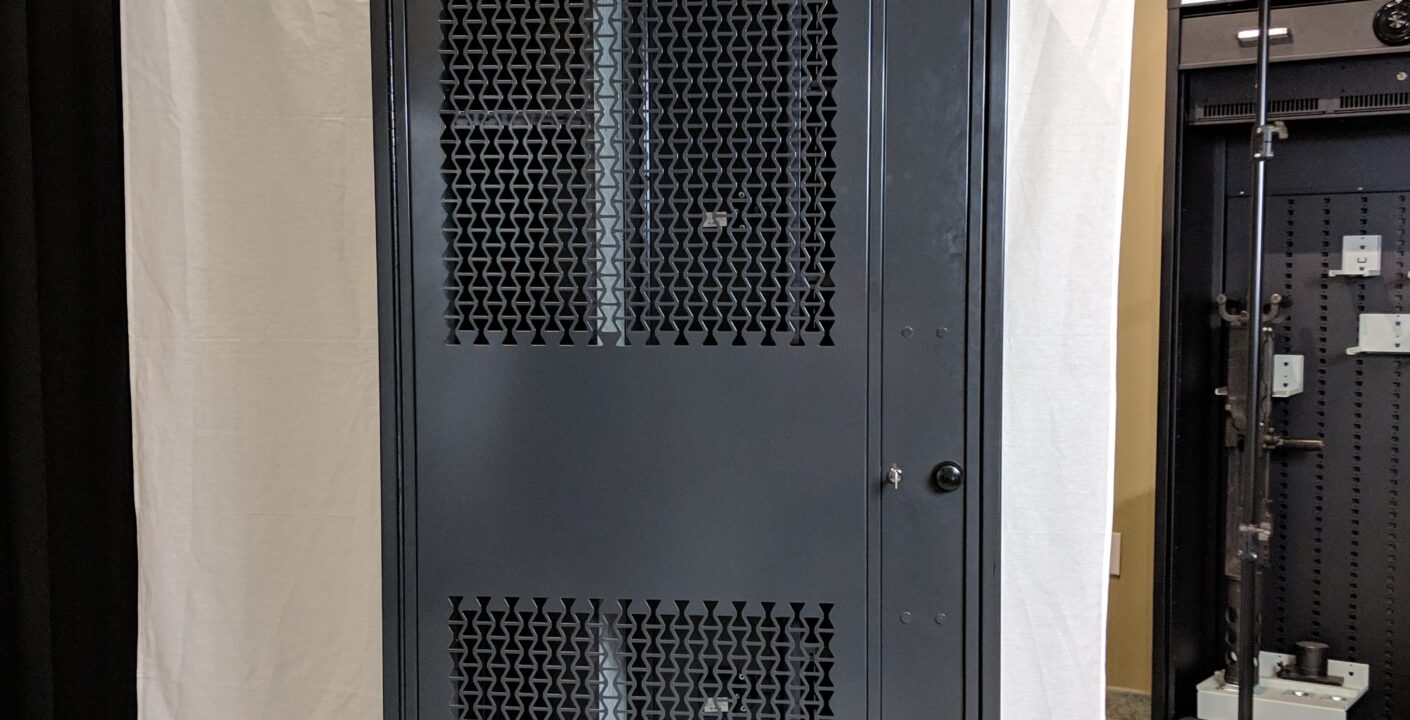
Purpose-built DASCO evidence storage systems are designed specifically around the chain-of-custody requirements that manual systems consistently fail to meet, with individual access logging, tamper-resistant audit trails, and integration with existing records management.
The Prevention Side of This Conversation
If you’re an evidence custodian or department leader reading this, the question worth sitting with is: if your evidence room were audited tomorrow, could you produce a complete, accurate chain-of-custody record for every firearm in storage?
Not a mostly complete record. Not a record with a few gaps you could explain away. A complete record.
If the honest answer is no, the follow-up question is whether that’s a personnel issue or a systems issue. In most cases I’ve seen, it’s the latter. The people running evidence rooms are often doing everything within their power to maintain accurate records. The system they’re working with just wasn’t built for the accountability standard now required of it.
Upgrading to a tracked, access-controlled storage system doesn’t eliminate human error entirely. But it removes the conditions where human error becomes invisible, which is where the real liability lives.
For departments that also need to address duty weapon storage alongside evidence firearms, DASCO’s law enforcement weapons storage line applies the same access control and audit trail principles to patrol and tactical weapon storage.
A Note on Timing
Departments typically look at storage upgrades after something goes wrong. An audit flag. A missing item. A case that got complicated.
The problem with that timing is obvious. The upgrade that would have prevented the problem doesn’t help you once you’re in remediation mode. It helps the next department that reads about your situation and decides not to wait.
If your evidence room is running on a system you know has gaps, the cost of fixing it now is almost certainly lower than the cost of explaining those gaps later.
Read more practical guidance for law enforcement on the Arctos Industries blog.
Not sure whether your current evidence storage meets modern accountability standards?
We work with departments to evaluate what they have and identify where the gaps are before they become problems. No obligation, just a practical conversation.
Reach out at arctosindustries.com/contact or visit arctosindustries.com to learn more.
For Law Enforcement professionals: your agency’s training officers and SOPs should guide your specific operational setup. This article focuses on storage and evidence management considerations to inform purchasing and compliance decisions.