
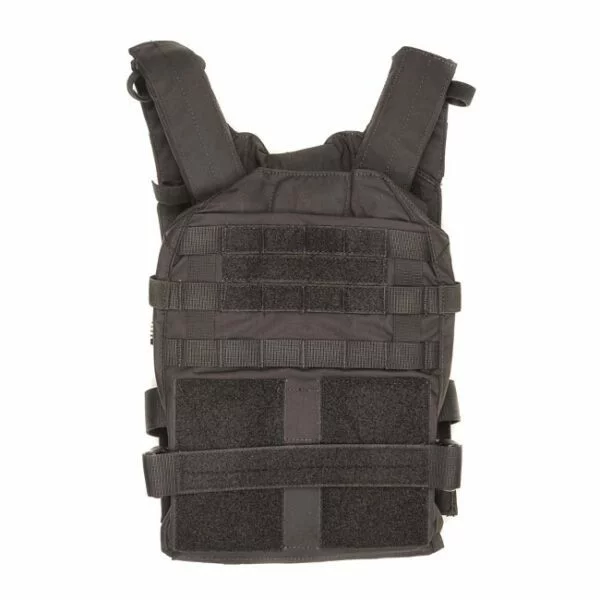
Spend enough time in the body armor space and you start to notice a pattern. The most searched, most discussed, most visually documented plate carrier configurations on the internet tend to be built around special operations imagery, the low-profile carriers, the minimalist loadouts, the photos from training environments that look purpose-built and dialed in. And what follows, reliably, is a flood of buyers, military veterans transitioning to civilian or law enforcement roles, active personnel evaluating personal purchases, and serious civilians, trying to replicate that configuration without fully understanding what drove the original decisions.
The setup you see in a photograph is the result of a specific mission profile, a specific threat environment, a specific unit SOP, and years of individual operator refinement. None of that context travels with the image.
For Law Enforcement and Military professionals: your agency’s training officers and SOPs should guide your specific setup and employment. This article focuses on gear specifications and considerations to inform purchasing decisions.
What a Plate Carrier Is Actually Solving
Before getting into configuration considerations, it’s worth being precise about what a plate carrier system is engineered to do, because that clarity tends to cut through a lot of the noise around “optimal setups.”
A plate carrier holds ballistic plates in front of and behind the torso, providing rifle-rated protection to the vital organ mass in those coverage zones. The carrier itself is the platform. The plates are the protection. Everything else attached to the carrier, pouches, communications, medical, accessories, is mission-specific equipment organization layered on top of the protection function.
When a plate carrier setup fails to serve someone well, it’s almost always because those two layers got conflated. Either the plates were selected based on the carrier’s aesthetics rather than the actual threat level needed, or the carrier got loaded with equipment that was appropriate for one environment but creates real problems in another. A setup optimized for a vehicle-based operation looks very different from one built for foot movement over distance, and both look different from a setup designed for close-quarters environments.
Plate Selection: Where This Conversation Actually Starts
The carrier is a harness. The plates are the decision that matters most, and yet plate selection is frequently the least carefully evaluated part of a purchase.
The NIJ protection level framework defines what each plate type has been tested to stop:
- Level III plates are tested against .308 Winchester (7.62×51 NATO) at standard velocity. They provide solid protection against a wide range of common rifle threats and are available in ceramic composite, UHMWPE, and steel construction.
- Level III+ is not an official NIJ designation. It’s a manufacturer-used label indicating the plate has been tested against specific higher-velocity threats beyond the standard Level III protocol, most commonly M193 5.56 at higher velocity or M855 green tip. If a supplier is presenting Level III+ plates, ask for the specific test documentation rather than accepting the label at face value.
- Level IV is the highest NIJ rating, tested against a single .30 caliber armor-piercing round (M2 AP). Level IV plates provide the broadest certified rifle protection but come with weight implications that matter in sustained operational contexts.
The material choice within each level involves a genuine trade-off between weight, thickness, multi-hit capability, and durability. Ceramic composite plates offer excellent protection-to-weight ratios but can crack from drops and impacts outside of ballistic events. UHMWPE plates are lighter still and handle multi-hit scenarios well but have performance limitations against certain high-velocity steel-core threats. Steel plates are durable and affordable but significantly heavier and carry spall fragmentation concerns without appropriate coating. Understanding the body armor material categories in depth is useful before committing to a plate specification, particularly for volume procurement.
Carrier Platform: Fit Before Everything Else
The single most undervalued factor in plate carrier selection is fit, and it’s where the special forces imagery causes the most practical problems for buyers.
Plates are manufactured to specific dimensions, most commonly 10×12 inches for a standard shooter’s cut. A carrier needs to position those plates so the top edge of the front plate sits at or just below the sternal notch, the small dip at the top of your sternum. If the plate sits too high, it restricts neck movement and can impact breathing under exertion. If it sits too low, it’s not covering what it’s designed to cover.
Carriers also vary significantly in how they accommodate plate size, cummerbund design, shoulder strap geometry, and side protection configurations. A carrier that looks identical to a reference photo may fit an operator with a 34-inch chest and a 5’10” frame perfectly and create real functional problems for someone built differently. Many plate carrier manufacturers publish plate window dimensions and recommended torso measurements. Treating those as guidelines rather than suggestions is a mistake.
Side plate compatibility is worth evaluating as part of the initial carrier selection as well, particularly for environments where flanking threats are realistic. A carrier that accommodates 6×6 or 6×8 side plates in integrated pouches provides meaningfully broader coverage than a minimalist carrier with no side plate option.
The Weight Question Doesn’t Get Answered Honestly Enough
A fully configured Level IV ceramic plate carrier setup runs heavy. A pair of Level IV ceramic plates alone commonly weighs between 14 and 18 pounds depending on manufacturer and construction. Add the carrier, cummerbund, and any side plates, and you’re at 20 or more pounds before a single pouch is attached.
That weight matters differently depending on context. For a vehicle-based operation where the carrier goes on before dismounting and comes off afterward, the sustained carry weight is manageable. For foot movement over distance in elevated terrain, that same setup is a different conversation entirely.
At Arctos, we see buyers gravitate toward Level IV configurations because Level IV sounds like the maximum protection, and the logic feels sound. More protection is better. What doesn’t get factored in is that protection functions poorly if the weight compromises mobility, reaction speed, or endurance in the actual environment the gear will be used in. A well-fitted Level III UHMWPE plate setup that allows full range of motion and sustainable movement may serve someone better than a heavier Level IV configuration that degrades performance after the first hour.
This is not an argument against Level IV plates. It’s an argument for matching the specification to the honest reality of how and where the gear will be worn.
Cummerbund and Side Coverage: The Often Skipped Decision
The cummerbund is the system that wraps from the front plate to the back plate around the sides of the torso. It’s where a significant portion of the configuration variation between carrier platforms lives, and it’s frequently evaluated as an afterthought behind aesthetic choices about the front panel.
Cummerbund options broadly fall into three categories:
Elastic or bungee cummerbunds prioritize comfort and ease of adjustment, providing a snug fit without rigid structure. They don’t typically accommodate side plate pockets, but they reduce bulk and work well for environments where side plate coverage isn’t a priority.
Rigid or semi-rigid cummerbunds offer more structure and typically integrate side plate pockets for 6×6 or 6×8 side armor. They add weight and some restriction of lateral movement but provide substantially better side coverage.
Modular cummerbunds allow the operator to configure the cummerbund with or without side plate capability and sometimes offer integrated storage or attachment options for medical or communication equipment.
The choice between these is genuinely environment-dependent. For a buyer working in an environment with a realistic lateral or close-quarters threat profile, the added weight and slight movement trade-off of a rigid cummerbund with side plates may be well justified. For someone prioritizing mobility and concealability in a different context, the elastic option makes more practical sense.
What Gets Attached and Why It Should Be Thought Through Carefully
The MOLLE (Modular Lightweight Load-carrying Equipment) attachment system on most modern plate carriers creates an open invitation to keep adding things. And this is where configuration discipline tends to break down.
Every pouch, accessory, and piece of attached equipment has a weight, a volume, and an ergonomic impact. A front panel loaded with magazine pouches, medical, communication, and utility pouches that looked functional in a product photo can create a meaningful restriction on prone shooting positions, vehicle ingress and egress, and general mobility in confined spaces.
The useful discipline here is to start with what the mission or environment actually requires, not with what the platform can accommodate. Consider what needs to be accessible in the first few seconds of a critical situation versus what can be carried elsewhere. Think about the placement of medical relative to access with either hand. Evaluate weight distribution across front, back, and sides.
These are not tactical prescriptions. They’re practical ergonomic questions that any buyer should think through before finalizing a configuration, because a gear decision that’s expensive to reverse deserves that consideration upfront.
Plate Carrier Care, Inspection, and Storage
This section gets less attention than it deserves, particularly for buyers making significant investments in protective equipment.
Carrier platforms should be inspected regularly for webbing integrity, buckle function, plate retention security, and MOLLE stitching condition. A carrier that’s been stored improperly, exposed to extended heat, moisture, or UV light, can degrade in ways that aren’t visually obvious until the system fails under load.
Plates should be inspected for chips, cracks, and structural damage, particularly ceramic plates that may have absorbed impacts during handling or storage. A visually intact surface doesn’t always indicate structural integrity after impact damage. Manufacturers typically provide guidance on inspection intervals and replacement criteria, and those recommendations are worth following rather than treating armor as indefinitely serviceable.
For departments, units, or operations managing multiple carrier systems, purpose-built storage solutions designed for body armor and tactical gear significantly extend equipment service life and simplify inventory management compared to stacking equipment in lockers or bags. The organization and environmental protection that dedicated storage provides is a logistics detail that quietly affects long-term procurement costs.
Matching the Setup to the Environment, Not the Image
The most useful thing to carry away from this is a framework rather than a specification. The right plate carrier setup is the one that matches the actual threat level of the environment, fits the operator correctly, is weighted appropriately for the realistic duration and intensity of use, and is configured with only the equipment that genuinely serves the mission.
That framework produces very different answers for a corrections officer, an active duty special operations member, a law enforcement officer in a rural jurisdiction, and a civilian making a considered preparedness purchase. None of those answers looks identical to a photograph from a training exercise, and that’s exactly as it should be.
If you’re working through a plate carrier or plate selection decision and want a practical conversation about specifications, materials, and what configuration approach makes sense for your specific environment, the team at Arctos is glad to help cut through the noise.
What’s the primary environment or role you’re configuring for? That question alone usually narrows the specification conversation significantly.