
It’s 0545. An officer is starting a 0600 shift and spending the first ten minutes of it looking for a piece of kit that should be right where it always is and isn’t. The vest carrier is there. The plate carrier is there. The helmet is somewhere in the back of a shared cabinet that hasn’t been properly organized since the last equipment issue.
Nobody files a report about that ten minutes. It doesn’t show up in any operational metric. But it happens every shift, across every officer who shares that gear room, and it adds up to something real: friction, frustration, and a subtle but steady erosion of the confidence officers should feel walking into a shift fully equipped and ready.
Gear room organization is one of those topics that gets dismissed as a facilities concern rather than an operational one. That framing is wrong, and the departments that have fixed it know exactly why.
The Invisible Tax on Every Shift
Think about what a disorganized gear room actually costs in time across a department. An officer spending five to ten minutes per shift locating, checking, and reassembling gear that wasn’t properly stored by the previous shift doesn’t sound significant in isolation. Multiply that by the number of officers sharing the space, across every shift, over a year, and you’re looking at a substantial number of paid hours spent on a problem that a well-organized storage system eliminates almost entirely.
That’s the direct time cost. The indirect costs are harder to quantify but just as real.
Gear that isn’t stored consistently gets inspected less consistently. Items that live in a designated, labeled space get checked as a matter of routine because the absence of something in its place is immediately visible. Items that float between a shared cabinet, a locker, and whatever surface was available tend to get assumed present rather than confirmed present. That assumption is fine until it isn’t.
There’s also a morale dimension that leadership sometimes underestimates. Officers who start every shift navigating a chaotic gear room are getting a small but consistent message about how the department values their time and their operational readiness. It’s not a message anyone intends to send. It gets sent anyway.
What Disorganized Gear Storage Actually Looks Like
In most departments, gear room disorganization isn’t the result of neglect. It’s the result of storage infrastructure that was never designed for the volume and variety of equipment modern patrol officers carry.
A storage room built around basic shelving and shared cabinets made sense when duty gear meant a duty belt and a vest. It doesn’t work as well when you add plate carriers, helmets, tourniquets, less-lethal options, body cameras and their charging infrastructure, and the growing list of specialized equipment that officers are now expected to manage and account for.
When storage infrastructure doesn’t scale with equipment inventory, the gear room organizes itself around the path of least resistance, which usually means whatever fits wherever it fits. Individual officers develop their own systems within a shared space, those systems conflict with each other, and the result is a room where everyone knows roughly where their stuff is but nobody can reliably find anyone else’s.
Shared gear compounds this significantly. Equipment that multiple officers use across multiple shifts needs a storage system that resets to a known state after every use. Without that, each shift inherits whatever state the previous shift left behind.
The Accountability Gap That Goes Unnoticed
Gear rooms also create accountability gaps that departments don’t always recognize until equipment goes missing or an inventory audit produces numbers that don’t reconcile.
When gear is stored without individual assignment, in shared spaces with no access logging, the accountability question becomes difficult to answer. If a piece of equipment is missing, who had it last? If it was damaged, when did that happen and under what circumstances? If it needs to be replaced, is the replacement going into a system that will track it any better than the one it’s replacing?
These questions matter beyond the administrative inconvenience. Equipment accountability is part of the broader operational readiness picture, and departments that can’t demonstrate it create exposure during inspections, accreditation reviews, and any incident investigation where the condition or location of specific equipment becomes relevant.
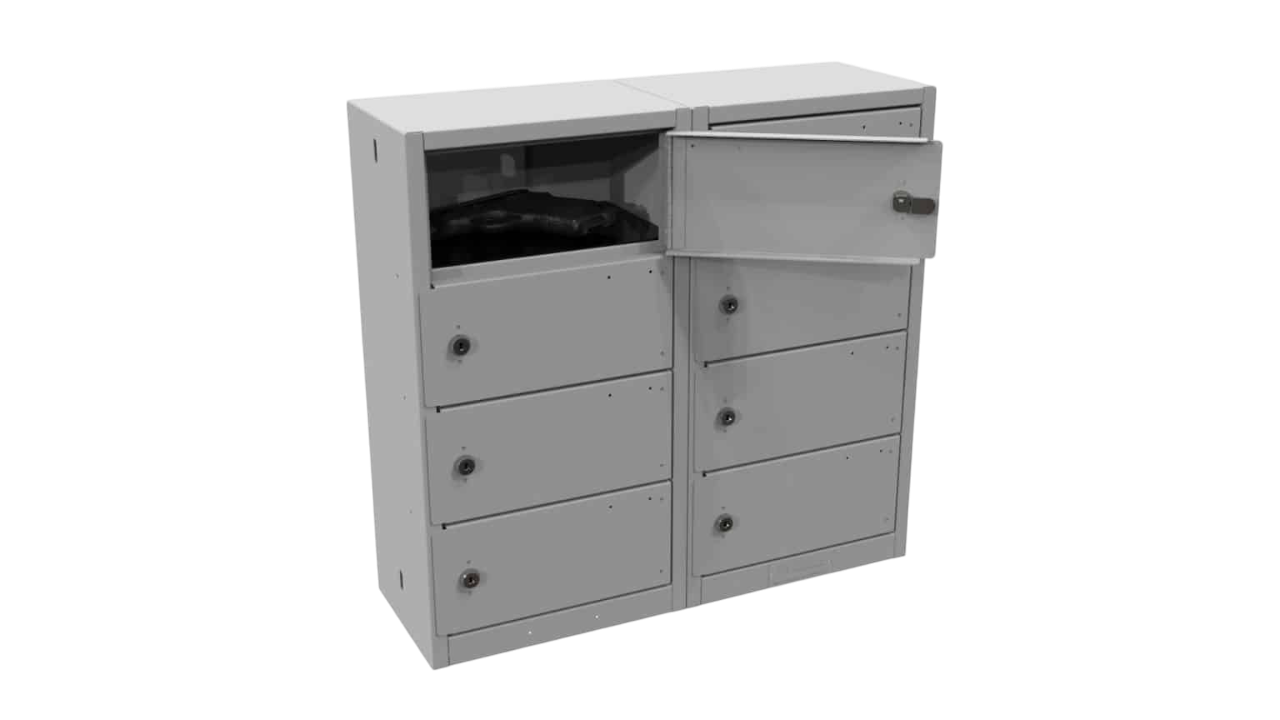
Purpose-built DASCO law enforcement gear storage systems are designed around individual assignment, consistent layout, and the kind of access control that makes gear accountability automatic rather than dependent on everyone following a procedure correctly every time.
What a Well-Organized Gear Room Changes
Departments that have upgraded their gear storage infrastructure report changes that go beyond the obvious time savings, though those are real and measurable.
Gear inspection rates go up when storage makes the default state of a space organized and consistent. When every item has a designated location and that location is visible, the check becomes part of the routine rather than an additional step. Officers know immediately if something is missing, damaged, or out of place because the storage system makes the normal state obvious.
Shift transitions become faster and cleaner. An officer ending a shift returns gear to its designated location. The officer starting the next shift finds it there. That sounds basic because it is basic, but it requires storage infrastructure that enforces the behavior rather than just requesting it.
Equipment lifespan improves when gear is stored correctly rather than piled, compressed, or left in conditions that accelerate wear. Plate carriers stored flat in designated slots last longer than plate carriers folded into the bottom of a shared cabinet. That difference shows up in replacement costs over time.
And the morale effect is real. Officers who walk into a gear room that works the way it should, find their equipment where it belongs, and get out the door on time start their shift in a different headspace than ones who don’t. That difference is worth something even if it’s hard to put a number on it.
Connecting Gear Storage to the Broader Storage Picture
Gear storage rarely exists in isolation. Most departments managing a gear room are also managing weapons storage, ammunition storage, and evidence storage, often with infrastructure of varying age and quality across all four categories.
The departments that get the most value out of storage upgrades are typically the ones that approach it as a system rather than addressing one category at a time. Consistent access control standards, compatible audit trail systems, and storage configurations designed to work together produce a coherent operational environment rather than a collection of individual upgrades that don’t quite connect.
The full range of DASCO law enforcement storage solutions covers weapons, ammunition, evidence, and gear storage under a consistent design and accountability framework, which matters when a department is trying to bring multiple storage categories up to the same standard at the same time.
A Practical Starting Point
If your gear room is causing the kind of friction described here, the starting point isn’t a full infrastructure overhaul. It’s an honest assessment of where the friction actually comes from.
Is it shared storage without individual assignment? Is it a layout that made sense for a smaller equipment inventory and hasn’t been updated? Is it the absence of any system for resetting the space to a consistent state between shifts? Is it all three?
The answer shapes the solution. A department that needs individual assignment above everything else has different infrastructure requirements than one that mainly needs better layout and labeling. Getting that diagnosis right before specifying a system saves time and budget on both sides of the purchase.
What does your current gear room cost your officers every shift? It’s worth calculating before the next budget cycle. Read more practical guidance for law enforcement on the Arctos Industries blog.
Want to talk through what a gear storage upgrade would look like for your department’s size and layout?
We work with departments to assess what’s causing the friction and match storage solutions to the actual problem, not just the most expensive option.
Reach out at arctosindustries.com/contact or visit arctosindustries.com to learn more.
For Law Enforcement professionals: your agency’s training officers and SOPs should guide your specific operational setup. This article focuses on storage specifications and gear management considerations to inform purchasing decisions.