
By Duncan Horner, CEO — Arctos Industries
For Law Enforcement and Military professionals: your agency’s training officers, unit SOPs, and chain of command should guide your specific gear configuration and operational employment. This article focuses on equipment specifications and configuration considerations to inform gear selection decisions.
The placard is the component that makes the HRT carrier system work as a system rather than as a fixed configuration. Without it, a plate carrier is a carrier with a specific front panel that serves a specific role. With it, the same carrier becomes a platform that can be configured for patrol, entry, training, or any other mission profile by swapping one component rather than rebuilding the entire front panel.
Most operators who run HRT carriers understand that placards exist. Fewer have fully worked through what the placard system makes possible in terms of mission-specific configuration and agency-level standardization. This guide covers both.
What a Placard Actually Is and How It Attaches
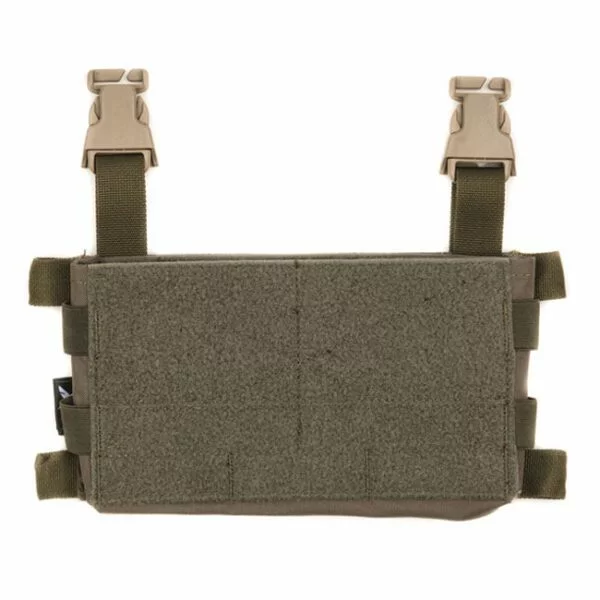
A placard is a pre-configured front panel insert that attaches to the carrier’s placard-compatible cummerbund system and carries the magazine pouches, utility pouches, and accessory attachments that the mission requires. The placard occupies the front panel zone of the carrier as a single unit rather than as a collection of individually MOLLE-attached pouches.
The attachment mechanism is the design decision that makes the swap fast enough to be operationally relevant. HRT placards attach through a connection system that allows a trained operator to swap the front panel configuration in under a minute without tools and without removing the carrier. The outgoing placard detaches at the connection points, the incoming placard seats and locks, and the carrier presents a completely different front panel configuration ready for use.
That swap speed matters in two contexts. For individual operators who need to transition between roles, a placard swap between a patrol configuration and an entry configuration happens in the staging area rather than requiring a separate carrier for each role. For agencies running a pool of shared carriers, the same carriers serve different teams and different operational profiles by maintaining a placard inventory rather than a carrier inventory for each configuration.
The placard sits flush against the front panel of the carrier when correctly attached, with the same profile as a carrier with directly MOLLE-attached pouches. An operator wearing a placard-configured carrier doesn’t present a different external profile than one wearing a direct-attach configuration, which matters for law enforcement applications where carrier profile affects concealment and mobility assessment.
Common Placard Configurations and What They’re Built For
HRT placard configurations cover the primary mission profiles that law enforcement and military operators encounter, with pre-configured options that address the most common setups and blank platform options that allow custom configuration from the HRT accessory range.
A patrol configuration placard typically carries two to three rifle magazine pouches, a pistol magazine pouch, and a utility or medical pouch. That configuration supports the magazine capacity that patrol roles require without the weight and bulk of a fully loaded entry configuration. The patrol placard is the configuration most officers will wear for the longest periods, and it reflects that by prioritizing comfort and mobility over maximum magazine capacity.
An entry configuration placard carries four to six rifle magazine pouches, configured for the high magazine capacity that close-quarters operations demand. Entry operators expect to go through more ammunition faster in a more confined space than patrol operators, and the front panel configuration reflects that by prioritizing magazine capacity over the utility pouch space that a patrol configuration might include. Entry placards are typically heavier and less comfortable for extended wear than patrol placards, which is an acceptable trade-off for the operational context they’re built for and an argument for keeping them on the placard rather than making the carrier permanently configured for entry use.
A training configuration placard is typically lighter than either operational configuration, with reduced magazine capacity and a front panel footprint that keeps carrier weight down during extended training evolutions where the full operational magazine load isn’t necessary. Running a training placard rather than an operational placard during training reduces wear on the primary operational placard and keeps the carrier comfortable for the longer periods that training evolutions often require.
Blank platform placards are the starting point for custom configurations. The blank platform provides the attachment structure and the connection interface without pre-installed pouches, allowing operators to build a mission-specific configuration from HRT’s accessory range using the same MOLLE attachment system that applies to direct carrier attachment. The advantage over direct carrier attachment is that the custom configuration is built on the placard rather than on the carrier, keeping the carrier itself clean for easy placard swaps and preventing permanent pouch attachment marks on the carrier’s front panel.
The full HRT placard lineup covers pre-configured and blank platform options with the configuration compatibility documentation that makes placard selection for a specific carrier and mission profile straightforward.
How the Placard Changes the Carrier’s Relationship to the Back Panel
The placard system’s effect on front panel configuration has a direct relationship to back panel configuration that operators don’t always account for when they’re evaluating placards in isolation. A heavier front panel placard changes the carrier’s weight distribution and may affect how the back panel needs to be loaded to maintain comfortable carry through a full operational period.
An entry placard with six rifle magazines and associated accessories is significantly heavier than a patrol placard, and running a heavy back panel alongside it produces a carrier that’s loaded front and back in a way that may be appropriate for the mission duration and may not be comfortable or practical for the operational tempo. Configuring the back panel in relationship to the front placard rather than independently produces a total carry weight that’s considered rather than accumulated.
The back panel also carries equipment that complements the front panel configuration. A patrol placard that carries limited medical gear on the front may run a more fully configured IFAK on the back panel. An entry placard with maximum magazine capacity on the front may run a minimal back panel to keep total weight manageable for the short-duration, high-intensity scenarios that entry configurations are built for.
The HRT back panel range covers configurations that work alongside the placard options described here, with the weight and attachment compatibility information that makes front-to-back configuration balance achievable rather than approximate.
Placard Configuration for Agency Standardization
The placard system’s most significant operational value for agencies and units is in standardization. A department that purchases carriers with a placard inventory covering patrol, entry, and training configurations has effectively standardized on a single carrier platform that serves every operational role through placard selection rather than maintaining separate carrier inventories for each role.
That standardization produces direct benefits in training, maintenance, and accountability. Every operator is trained on the same carrier platform with the same connection system, which means the muscle memory for donning, doffing, and accessing the carrier is consistent across the team regardless of which placard configuration is loaded. Carrier maintenance is consistent because the carrier itself is the same unit across all configurations. Accountability is cleaner because the carrier is the serialized asset and the placards are the configuration components, rather than every configuration being a separate carrier that requires separate inventory management.
The procurement logic also changes when the placard system is understood correctly. The per-unit cost of purchasing one carrier per officer with a two-placard set covering patrol and entry configurations is typically lower than the per-unit cost of purchasing two carriers per officer for the same coverage. The placard investment purchases mission-specific configuration capability at a fraction of the cost of a second carrier, and the configuration capability is more flexible because additional placard options can be added without purchasing additional carriers.
Swapping Placards: What the Process Actually Looks Like
A placard swap that takes five minutes in a quiet environment takes significantly longer under operational time pressure if the operator hasn’t rehearsed it. The swap process is simple enough that it becomes quick with practice and awkward without it, which means it’s worth adding to regular gear familiarization training rather than assuming it will work correctly when it’s needed.
The swap sequence involves releasing the connection points at the top and bottom of the placard, clearing the placard from the carrier’s front panel, seating the new placard at the top connection points, and securing the bottom connection points. Each step is straightforward. The sequence needs to be rehearsed enough that it happens correctly under time pressure without requiring deliberate attention, the same standard that applies to every other equipment manipulation that needs to happen when conditions aren’t ideal.
Confirming that the placard is fully seated and all connection points are secured before the carrier goes on is the check that prevents the most common swap error, which is a partially attached placard that feels secure in static handling and shifts under the first dynamic movement after the carrier is donned. Check it before it goes on, not after.
The full HRT carrier range covers the placard-compatible cummerbund configurations that make the swap system work, with sizing and compatibility information for the full placard lineup. Read more gear selection and configuration guidance on the Arctos Industries blog.
Want help selecting the right placard configurations for your specific mission profiles and carrier setup?
We work with operators and agency buyers through placard selection and configuration decisions, with practical guidance built around the operational roles the gear needs to serve.
Reach out at arctosindustries.com/contact or visit arctosindustries.com to learn more.
For Law Enforcement and Military professionals: your agency’s training officers, unit SOPs, and chain of command should guide your specific gear configuration and operational employment. This article focuses on equipment specifications and configuration considerations to inform gear selection decisions.