
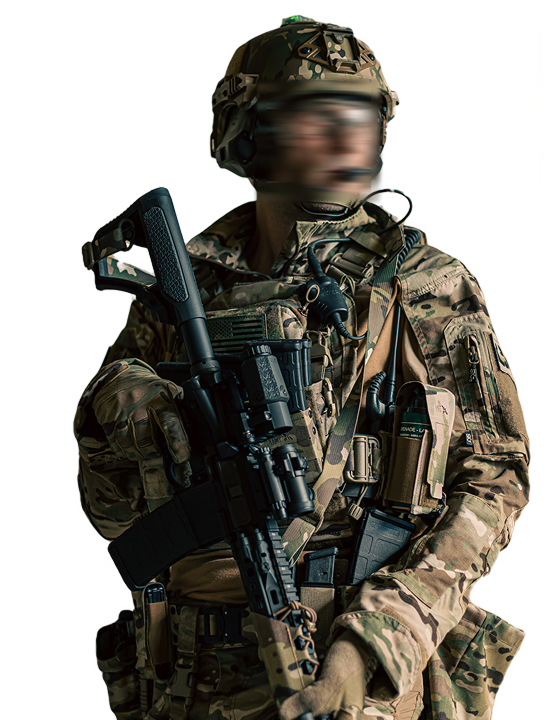
The HRT RAC, HRAC and LBAC all take the same placards and standard 10×12 SAPI-style plates, so the choice comes down to three things: how the back panel attaches gear, whether the shoulder straps release, and how much load the cummerbund is built to carry. The HRAC is the simplest of the three, the RAC adds HRT’s zip-on back panel system, and the LBAC adds a rigid load-bearing chassis for heavier kits.
If you are outfitting a patrol unit, a tactical team, or just yourself, here is how the three actually differ, using HRT’s own published specs.
Where the three carriers differ
The differences are narrower than most people expect. All three are built from 500 denier Cordura, and HRT notes that every one of its carriers accepts its placards and most 10×12 inch SAPI-style plates. So whichever carrier you choose, the front of your kit stays interchangeable.
What changes is the back, the shoulders and the cummerbund:
- HRAC: MOLLE webbing on the outside of the rear plate bag, non-detachable shoulder straps, basic cummerbund strap included
- RAC: proprietary rear that takes HRT’s Full and Half Zip-On Back Panels, a releasable shoulder buckle that can be moved to either side, basic cummerbund strap included
- LBAC: dual-zipper rear that takes the same zip-on panels, dual quick-release shoulder straps, and a rigid quick-release cummerbund built for load bearing
The HRAC and RAC can both be upgraded with HRT’s 2-Band and Quick Release cummerbunds.
The HRAC: the stripped-down option
The HRAC is HRT’s no-frills carrier. It is double stitched, and the rear plate bag carries MOLLE webbing instead of a zipper system.
That MOLLE rear is the main trade-off. You can mount pouches directly to it, but HRT’s zip-on back panels will not attach without its separate Zip-On Panel MOLLE Adapters. The shoulder straps are also fixed rather than releasable.
For buyers who want a light, simple carrier and plan to run a fixed back setup, that simplicity is the point. It is also typically the lowest-priced of the three.
The HRT RAC plate carrier: built for swapping back panels
The RAC started as the HRAC with one major change. When HRT released it in 2019, it was described as the HRAC with the addition of the MultiZip dual-zipper back panel attachment system.
That back panel is the reason to choose it. With two YKK zipper sections on the rear, you can swap between HRT’s full and half zip-on panels as the task changes, without re-weaving MOLLE straps. The shoulder strap buckle is releasable and can be set to either side, and the Cordura is treated with DuPont Teflon.
The LBAC: when the load gets heavier
The LBAC (Load Bearing Adaptive Carrier) is built around a different idea. Instead of a soft cummerbund, it uses a stiffened, ultra-lightweight cummerbund core that HRT says spreads weight across the whole torso, moving load away from common pressure points.
Key specs from HRT:
- Chassis fits torsos from 30 to 50 inches by default, and up to 58 inches with the XL core
- Rigid quick-release cummerbund included
- Dual quick-release shoulder buckles, configurable for right- or left-handed users or removed entirely
- The cummerbund core can be run slick or fitted with sleeves (side plate sleeves and large MOLLE sleeves are sold separately)
- Airflow channel on the inside, with optional Velcro pontoons or spacers
- Integrated Duraflex chest buckle system for quick add-ons through HRT placards
HRT describes the LBAC as being as close to “one-size-fits-all” as it can get, which matters if you are issuing carriers across a team with a wide range of body sizes. The trade-off is cost, since it is the most expensive of the three.
Plate sizes HRT carriers accept
All three take standard 10×12 inch plates. The LE or Large carrier fits 10×12 or SAPI Large plates, and the XL version of the RAC and LBAC fits 11×14 or X-Large SAPI plates.
Before ordering, check that your plate’s cut and size match the carrier. A 10×12 carrier will not hold an 11×14 plate, and SAPI cuts differ from shooter’s cuts. If you are pairing carriers with HighCom plates, our rifle plates page lists the sizes we stock.
Picking the best HRT plate carrier for patrol
There is no single answer, because it depends on what your officers carry and how your agency issues gear. Which carrier suits a given role is a decision for each agency’s own policy and training staff. This post covers published specifications only.
What we can say is how the specs line up with common buying priorities:
- Lowest cost and simplest setup: HRAC. Fixed straps, MOLLE rear, nothing extra to learn.
- Back panel flexibility: RAC. One carrier can run different zip-on panels for different assignments.
- Heavier loadouts and a wide range of body sizes: LBAC. The rigid cummerbund and 30 to 58 inch torso range are built for it.
If you want a deeper look at why HRT’s placard and zip-on ecosystem works the way it does, we covered that in what makes HRT carriers and LBE different from every other brand.
Warranty coverage
HRT backs its gear with a lifetime warranty against manufacturing and materials defects. It applies to the original purchaser and is not transferable, which is worth noting if your agency reissues carriers between officers.
Ordering HRT carriers through Arctos
Arctos Industries is an authorized HRT Tactical dealer. You can see the full range of HRT carriers and load-bearing equipment we supply, including cummerbunds, side plate sleeves and placards.
Still deciding between the RAC, HRAC and LBAC for your team? Talk to a product specialist about sizing, plate fit and agency quotes. Which matters more to your officers right now: back panel options or load bearing?